
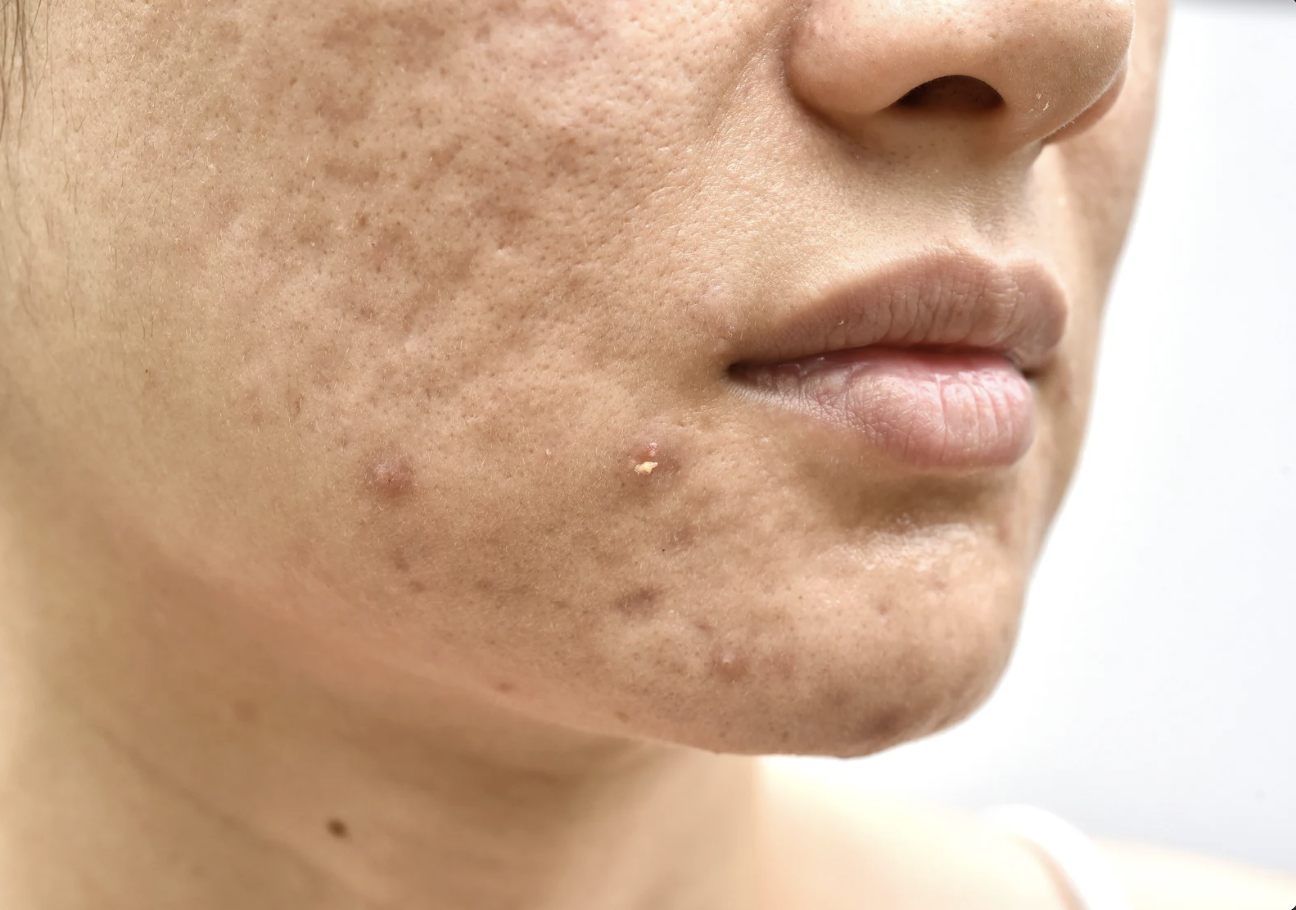
Imagine having clear, confident skin, with the ghosts of previous breakouts no longer visible on your skin. Acne scars are more than skin-deep scarring; they can be long-lasting mementoes of those breakouts. The scars can affect the texture of the skin as well as the individual’s self-confidence. Scarring is an over- or under-production of collagen in the skin as a result of the healing of inflammation, and it can lead to depressions or scar elevations.
Four major categories of scars of acne exist:
- Ice picks are narrow, deep pits
- Boxcars have broader, more acute edges
- Rolling scars create wave-like depressions
- Hypertrophic tissue occurs when excessive collagen accumulates
The guide below explains how different types of acne scars form and outlines commonly used treatment options in Singapore.
What’s the Difference Between Acne Marks and Acne Scars?
We talk about acne marks and acne scars regularly, and many people mistake one for the other. There are differences in the distinction, one affected by color, the other affected by texture.
Acne marks are temporary discolorations. These can appear as flat discolorations that are red, purple, or brown when inflammation has set in. They result when the skin secretes too much melanin or when the healing process dilates the blood vessels. Acne marks may fade over weeks to months, either naturally or with appropriate topical skincare.
Unlike acne marks, acne scars are longer-lasting textural changes resulting from damage to collagen during severe acne cases. Scars resulting from acne change the structure of the skin, so the treatment is enhancement, not removal.
Scars can be depressions, like ice pick, boxcar, or rolling scars. In some cases, acne scars may appear raised, known as hypertrophic scars. These may improve with treatments such as laser therapy or microneedling, which aim to smooth the skin surface and enhance texture.
How Acne Scars Form?
When an abnormally deep pore-lesion, like an acne cyst or nodule, ruptures the pore wall, its contents spill over into surrounding tissue, causing more damage. The body attempts to repair the consequent damage by producing new collagen in response.
The over- and under-production of collagen, however, ultimately determines which type of acne scars will materialize. When the body makes too little collagen, it can’t repair the skin well. This shortage can lead to indented scars, like ice pick scars or boxcar scars. But if the body forms too much collagen, it results in elevated, tough scars referred to as hypertrophic scars.
Scarring acne can result from various causes. Most scars result from very inflammatory or severe cases of acne, heredity, and the practice of picking or squeezing pimples. These practices aggravate inflammation and destroy the tissues further.
Types of Acne Scars
Ice Pick Scars
Ice pick scars are slim, deep indents that appear as little needle marks. These will predominantly develop on the cheeks, giving the face a bumpy, pitted look. Ice pick scars result from deep inflammation, most commonly as a consequence of cystic or nodular acne, that destroys the deeper dermal layers.
During healing, the body may produce too little collagen, preventing the wound from closing properly and leaving a narrow, deep indentation in the skin. Some individuals may notice gradual improvements in skin texture over several months as collagen remodeling occurs.
Ice pick scars may be treated using targeted approaches such as fractional laser resurfacing, depending on individual suitability. Results improve over several sessions. Some patients report smoother skin texture following a series of treatments, as collagen remodeling gradually progresses.
Boxcar Scars
Boxcar scars are oval or circular depressions with sharp edges and tend to leave the skin with a pockmarked appearance. Wider than ice pick scars, they are most evident on the temples and cheeks.
These occur when inflammation breaks down collagen, resulting in scarring and a decrease in facial volume. Since there isn’t sufficient collagen to cover the area, the site scars with a noticeable depression.
Standard therapies employ fractional or pico laser rejuvenation to rejuvenate the skin and induce collagen synthesis. Dermal filler injections elevate downward-acting areas and regain smooth contours. In deeper scars, a practitioner can employ an adjuvant treatment of subcision and filler to release tethered tissue and regain bulk in the subcuticular plane.
Combination therapy takes advantage of the strengths of each method — subcision breaks the fibrous bands that pull the scar downward, dermal fillers lift the depressed area, and laser treatments refine the skin’s surface for a more even appearance. Patients benefit from multimodal therapy based on optimizing scar contracture reduction outcomes.
The down time is low, and the result gets better as the new collagen matures over the years.
Rolling Scars
Skin with rolling scars has a wavy, irregular texture. It features soft slopes rather than sharp angles. These scars result when fibrous strands of tissue form below the skin’s surface, pulling it downward. The pulling action prevents the skin from lying flat, resulting in a roll-like or bumpy presentation.
Subcision is a commonly used treatment approach for rolling scars. It involves using a fine needle to loosen the fibrous bands to allow the skin to rise and be smooth.
Oftentimes, other procedures like laser or microneedling are paired with the puncture procedure to improve collagen regeneration and quality of the skin’s texture. Results improve with time as the body produces new collagen.
Keloid and Hypertrophic Scars
Unlike the first three, keloid and hypertrophic scars create apparent, raised scars on the skin. These tend to develop red or darker in color and you can feel them as hard lumps. This scarring is the result of an overproduction of collagen at the site of healing.
Hypertrophic scars stay in the confines of the original acne lesion. Keloid scars, however, extend beyond those limitations and tend to grow later in life. These scars most often present along the chest, shoulders, lower back, and jaw.
If redness is the most prominent feature of your scar, then laser treatment can be suitable. Where thickening is the most significant concern, however, the use of corticosteroid injections can be the most suitable choice.
A determination of these qualities can then guide decisions toward treatment before seeing a professional.
Best Procedures to Treat Acne Scars in Singapore
No single dermatologist can address all types of acne scars; an individualized technique is needed. The aim is to reduce the scars of acne, brighten the skin, and increase confidence. Doctors supervise safe procedures to ensure this effectiveness.
The most effective treatments for scarred acne aim at inducing the formation of fresh collagen as well as resurfacing the skin in the shortest period possible.
- Laser Treatments
Lasers, such as fractional CO₂ and picolasers, stimulate the rejuvenation of damaged skin and the production of collagen. The procedure is commonly used to treat concave scars such as rolling and boxcar scars.
Pico lasers are used to address pigmentation and texture concerns, and are generally associated with shorter downtime, depending on the individual. Typically, several treatments are necessary for progressive and long-term advancement.
- Microneedling and RF Microneedling
Microneedling uses fine needles to create collagen rejuvenation stimulation.
Together with radiofrequency energy, in the form of RF microneedling, the treatment provides added advantages in the form of contraction-driven by heat, boosting skin contraction as well as collagen restructuring effects.
This technique may provide deeper collagen stimulation compared to standard microneedling, making the treatment an appealing option for patients considering more dramatic effects.
Doctors use both methods to correct moderate and mild rolling or atrophic scars, with visible effects appearing after several months.
- Subcision and Dermal Filler
Practitioners use subcision for depressed or tethered scars to break up the fibrous bands that pull the skin down. A practitioner may then place hyaluronic acid filler or a filler that stimulates collagen, to elevate the scarred area.
These types of therapies address contour issues and adjunct treatments, such as microneedling or laser.
- Chemical Peels
Chemical peeling is helpful in the treatment of shallower scars or mottled pigmentation. It eliminates poor quality, outer skin layers to uncover healthier skin.
- Therapy for Hypertrophic and Keloid Scars
Hypertrophic and keloid scars need a different approach than other types of acne scars that are flat. Treatment options include lasers, corticosteroid injections, or silicone gel. These treatments aim to gradually soften and flatten scar tissue over time.
Often, the treatment of acne scars will depend on the specific scar and overall skin condition. Other options exist for hypertrophic and keloid scars in the form of corticosteroids and silicone gel.
Treatment recommendations are made based on clinical assessment and current medical practices.
Recovery, Results, and Cost Expectations in Singapore
Following treatment for acne scars, there is expected redness and swelling that lasts 24 to 72 hours, much like the sensation of a mild sunburn.
Gentle post-care is very important in proper healing. You need to cleanse and moisturize the area daily gently, and use a sunscreen with an SPF of 30 or higher to protect the area.
Importantly, the sunscreen does not just protect the area, but also helps RBC or red-brown colour post-inflammatory hyperpigmentation of the treated area by subduing UV rays that will trigger pigment production. These key factors speak to the importance of sun protection for the long-term success of your treatment.
Some individuals may observe gradual improvement over several weeks as collagen remodeling progresses. Many treatment plans involve multiple sessions spaced several weeks apart, depending on scar type and severity.
The cost of acne scar treatment in Singapore varies. It can range anywhere from $160 to over $1000 a session, depending on what kind of treatment you need, how severe your scars might be, and what number of treatments may be appropriate based on clinical assessment.
Avoiding Future Acne Scars
Early management of acne may help reduce the risk of scar formation.
Do not ever squeeze or pop an active pimple as it will cause additional damage and might lead to permanent scarring. Early treatment of inflammatory acne may reduce the likelihood of significant collagen damage.
Having a daily skin care routine is key! Use mild cleanser, wear daily sunscreen, and use non-comedogenic makeup to help protect and rebuild your barriers.
Educating you about comanging certain lifestyle factors or habits, such as stressors, nutrition, and hormones can also help prevent flare ups.
Regular follow-up appointments allow your provider to monitor progress and adjust treatment as needed.
Conclusion
Although acne scars can be long-lasting, appropriate treatment may help improve skin texture and appearance. The first step is identifying the type of acne scars you have, as this determines the most effective approach. Common treatment options include laser resurfacing, microneedling, or a combination of both.
For patients in Singapore, Different types of acne scars may be managed with medical guidance and established treatment techniques. A personalised treatment plan allows therapies to be tailored to your skin condition and treatment goals. Book a consultation with Aeon Medical today to explore your acne scar treatment options.
FAQs
Do Acne Scars Go Away Forever?
While acne scars cannot go away forever, there are options available to help make them appear less visible. Laser resurfacing treatments, microneedling treatments, a chemical peel, or fillers can help with the texture of the skin and even the tone.
How Many Laser Treatments Do I Need?
Treatment plans commonly involve multiple laser sessions, depending on scar depth and skin type. The number depends on the scar depth, skin, as well as the laser.
Is the treatment painful?
Some individuals may experience mild stinging or warmth, and topical anaesthetic is typically used to improve comfort.
Is laser scar removal for acne suitable for everyone’s skin type?
Laser suitability depends on individual assessment, and non-ablative lasers may be considered for darker skin types to reduce pigmentation risk.
How long before I can see the result of acne scar treatment?
Some individuals may notice gradual improvement over weeks, with continued changes over several months as collagen remodeling progresses.