
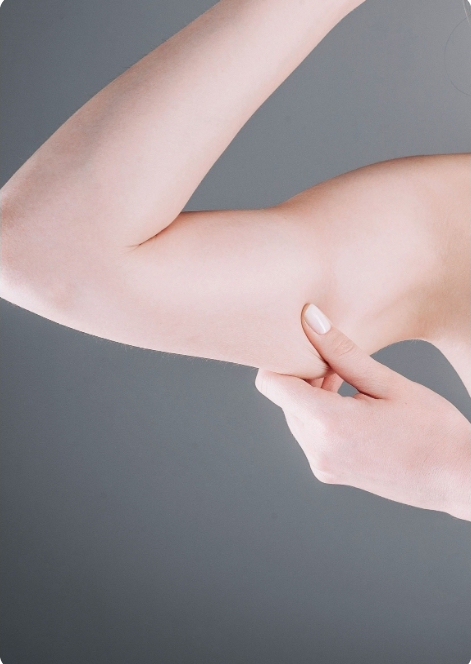
What is Skin Laxity?
Skin laxity, also known as skin sagging, is one sign of ageing where the skin loses the properties that provide elasticity. Facial ageing varies according to the individual, but after the mid-20s, there is a continuous decrease in collagen and elastin, which causes skin laxity.
Although the focus of facial sagging/laxity has been mainly on the skin, structures and layers below the skin, such as the subcutaneous adipose tissue (“fat layer”), muscles and even bone changes are now known to contribute to sagging in the face and neck.
As these structures collectively lose their elasticity and structural integrity, and as gravity continuously pulls downward on these structures, the downward migration of facial/neck structures leads to what we refer to as “sagging”. Individuals concerned about skin laxity may consult a doctor for assessment and discussion of suitable management options.
Common Areas of Skin Laxity
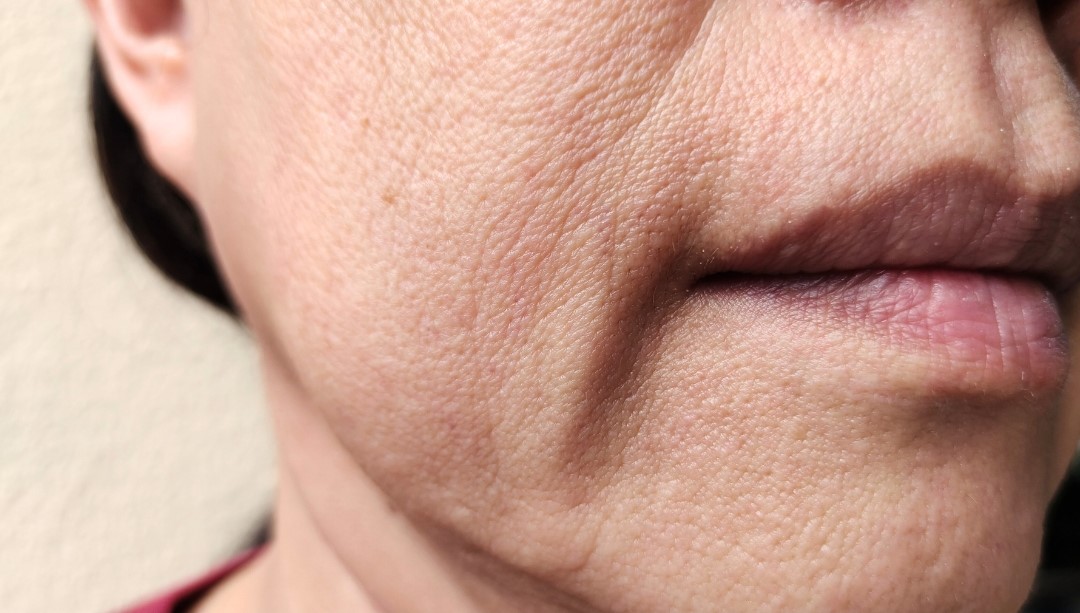
Common areas of sagging can be the eyebrows, upper eyelids, medial cheeks (“laughing lines”), jowls, mandibular margin (“jawline”), and neck. Since gravity cannot be altered, the focus to prevent and manage laxity is to stimulate collagen and elastin in all layers mentioned above.
Although there have been challenges in preventing and treating bone reabsorption, tightening connective tissue which attaches to the bone (specifically the skull in the face and neck) may be able to slow down this process of bone loss.
This loss in elasticity can be caused by a variety of factors, including genetics, lifestyle choices, and mostly exposure to environmental factors such as ultraviolet radiation.


Causes of Skin Laxity
Collagen and elastin are essential proteins that provide structure and elasticity to your skin. Collagen is what gives your skin its firmness and shape. Meanwhile, elastin fibres allow flexibility, so your skin can go back to its normal shape after being stretched.
As you get older, your production of collagen declines while elastin fibres become stiffer and lose their elasticity. This causes your skin to appear crepey and thin as it loses tone. On top of all of this, gravitational forces take their toll over the years, causing your skin to slowly stretch and sag. Apart from these universal ageing causes, sun exposure, smoking, genetics, and weight fluctuations can also accelerate the breakdown of collagen and elastin in your skin, leading to premature skin ageing and skin laxity.
Testing of Skin Laxity
The pinch test is a simple way to assess your skin’s elasticity. A simple method sometimes used to observe skin elasticity is the “pinch test”. Count how many seconds it takes to flatten back out. Generally speaking, a faster snapback is better. You can compare your results to these averages by age group for a sense of how much your skin has aged:
- Under 30 years old: 1-2 seconds
- 30-44 years old: 3-4 seconds
- 45-50 years old: 5-9 seconds
- Over 60 years old: 10-15 seconds
- Over 70 years old: 35-55 seconds
If your skin is slow to bounce back, you likely have some degree of laxity. Various treatments, such as anti-aging treatment, are available depending on individual skin condition.
Types of Skin Laxity

Generalised Skin Laxity
This type of skin laxity affects the entire body and is often caused by ageing, genetics, or significant weight loss.
Localised Skin Laxity
This type of skin laxity affects specific areas of the body and is often caused by intrinsic and extrinsic factors such as sun damage (also a culprit of hyperpigmentation), smoking, or poor nutrition.
Diagnosis
A medical professional's assessment is essential before deciding on treatment options. This starts with a thorough medical history including current and past illnesses, lifestyle factors (occupational factors, physical exercise, sun exposure, sunscreen application, previous related treatments, etc.) and family history. Unfortunately, there is still a lack of consensus on objective measurements of laxity and applications in healthcare institutions. However, various types of medical photography taken over time can show localised areas of skin sagging.

Signs and Symptoms of Skin Laxity
Loose, sagging skin

“Droopy” eyelids
Fine lines & wrinkles

Downward sagging of jowls
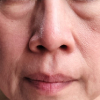
Elongation of the area above the upper lip

Eyebags
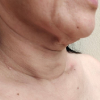
Loss of jawline definition

Thinning and crepiness of skin

Reduced skin elasticity and firmness
Types of Skin Laxity Treatment in Singapore
In terms of treatments available in medical institutions, they can be divided largely into non-surgical/non-invasive/minimally invasive and invasive/surgical groups, depending on the body area for which the treatment is being sought. For example, for underarm skin sagging treatment, you have the option of non-invasive as well as invasive treatment modalities.
Non-surgical options are done without general anaesthesia (GA) so the patient is awake and alert during the procedure, but topical anaesthesia (“numbing cream”) may be applied for certain modalities.
Changes may develop gradually over time. General anaesthesia allows the patient to avoid feeling pain but also has certain risks which need to be thoroughly discussed beforehand.
However, in some cases, invasive or surgical treatments may involve fewer treatment sessions. Even non-surgical procedures have possible side effects, so it is essential that the patient and doctor have a thorough pre-procedural discussion on the benefits and risks of skin laxity treatments that are to be undertaken.
Reducing or avoiding smoking and alcohol consumption may support overall skin health
Reducing tanning bed use, applying sunscreen appropriately, and limiting excessive sun exposure may help support skin health. Hats, protective clothing, and shade may be used to reduce sun exposure.
To check for other health issues which may contribute to wrinkle formation.
Mainly to prevent skin dehydration, but some ingredients such as Vitamin A and C derivatives may be able to address certain factors of laxity.
Invasive/Surgical Procedures
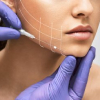
Thread lift
A thread lift is a procedure that uses synthetic threads to lift and tighten sagging skin on the face and neck. Different materials and lengths are available. (Due to regulations, these procedures have generally been performed by plastic surgeon specialists in Singapore since 2019 [exceptions exist].)
Surgical procedures
In cases of severe skin laxity, surgical procedures such as facelifts or body lifts may be considered, depending on individual assessment. These surgeries involve a different treatment approach from non-surgical options. These surgeries are performed by plastic surgeon specialists in Singapore.
Types of Non-Surgical/Minimally Invasive Procedures
IPL
Used for upper skin layers, but there is a chance of risk in darker skin types, those with more sun regular exposure and melasma patients.
Lasers
Some types can stimulate collagen in the skin and usually require multiple sessions. Higher risk in darker skin types, those with more regular sun exposure.
Ultrasound
Ultrasound treatments use sound waves to stimulate collagen production and improve skin firmness and elasticity. A common type is HIFU (High-Intensity Focused Ultrasound), which creates zones of heat at specific depths while preserving the upper layers from unwanted side effects.
Alternating Ultra-High Frequency Ultrasound
Another type of US can stimulate collagen and Heat Shock Proteins (HSP) while being painless with minimum downtime. In terms of intensity, it differs from HIFU and may involve a different treatment schedule depending on individual assessment.
Radiofrequency (RF)
Radiofrequency treatments use radio waves to heat the skin and deeper layers of the face/neck, which can stimulate collagen production and improve skin firmness and elasticity. Types of RF include monopolar, bipolar, multipolar, and microneedle. Pain, downtime, depth of energy and clinical results differ depending on the type used.
Local Injections
“Micro” botulinum toxin, “skin boosters” (polynucleotides, hyaluronic acid), “Biostimulators” (PLLA, PCL, Calcium Hydroxylapatite (CaHa)), exosomes. Injections require topical anaesthesia due to pain from injection and entail some type of “downtime” where the skin will have “bumps”, redness and/or swelling for a few days after the treatment.
Skin laxity and sagging are a natural process of ageing. The above treatments are just a general guideline and results will vary according to individuals. In the case of non-invasive treatments, both the type of treatment and the interval between treatments may be relevant. Also, there is no single treatment which can treat all issues of laxity in all layers of the face/neck. A comprehensive approach with customisation based on evidence is crucial in achieving desired results without adverse reactions.
Consult a Doctor for Skin Laxity Assessment in Singapore
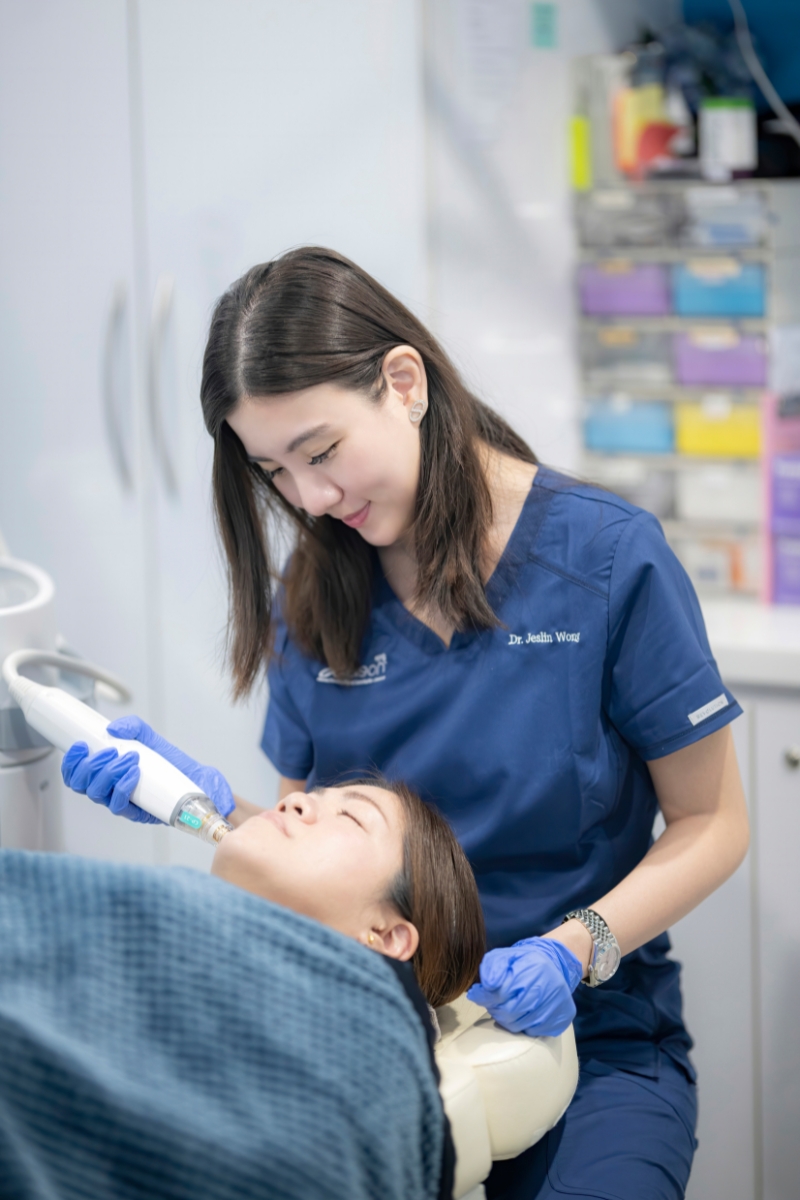
Consultation with a doctor is important when considering treatment options for skin laxity. At AEON Medical, Dr Jeslin provides consultation and treatment planning based on individual skin concerns and clinical assessment.
Treatment plans may be customised based on individual needs, and different treatment technologies may be discussed during consultation. Management options for skin laxity vary between individuals, and lifestyle measures may also be discussed as part of overall skin care.
If you would like to discuss management options for skin laxity, you may arrange a consultation with the clinic.
Frequently Asked Questions
There are a few non-invasive ways in which you can tighten your loose skin. These include:
- Losing weight
- Exercising
- Building muscle
- Using firming creams
- Using collagen supplements
- Cosmetic procedures
Although skin laxity cannot be entirely prevented, there are certain steps you can take to slow down its progression. These steps include:
- Maintaining a healthy lifestyle
- Consuming healthy, nutrient-rich foods
- Using sun-screen daily
- Avoiding smoking and alcohol
- Staying hydrated
- Using skincare products that support collagen production
The time for which the results of skin laxity treatment last depends on the types of treatment undergone. However, the duration of effect for surgical procedures may differ from that of non-surgical treatments.
Skin laxity treatments are generally safe for all skin types. However, some treatments, like laser treatments, may need to be used with caution for dark-toned individuals, as they can carry the risk of hyperpigmentation for them.
Disclaimer
The information provided on this website is for educational purposes only and is, in no way, intended to be a substitute for professional medical advice, diagnosis, or treatment. We make no representation or warranty of any kind regarding the accuracy, availability, adequacy, or validity of the information or procedures outlined on the website. Always consult professional medical and aesthetic advice for your skincare and medical concerns.
References:
- Heather Woolery-Lloyd, Jenna N Kammer, "Skin Tightening", National Library of Medicine, National Center for Biotechnology Information, 2011, https://pubmed.ncbi.nlm.nih.gov/21865807/
- Kevin R Kwan, Zachary Kolansky, Brian J Abittan, Aaron S Farberg, Gary Goldenberg, "Skin Tightening", National Library of Medicine, National Center for Biotechnology Information, 2020, https://pubmed.ncbi.nlm.nih.gov/33104122/
- Ramin Fathi, MD, FAAD, Director, Phoenix Surgical Dermatology Group, Phoenix, "Skin sagging treatment - underarms", National Library of Medicine, 2022, https://medlineplus.gov/ency/article/002135.htm
Contact Us
Call us anytime
Talk to our friendly AEON team by filling out the form. We will get back to you within 2-3 working days. For a faster response, contact our hotline below.
9 Scotts Rd, #06-01/02/03 Scotts Medical Centre, Pacific Plaza Singapore 228210