
Key Takeaways
- Changes in facial contour often involve both tissue laxity and declining skin quality.
- A non-surgical face lift addresses deeper structural layers, while skin regeneration supports how well those changes are maintained.
- Combining lifting technologies with dermal support focuses on stability and adaptation rather than surface tightening alone.
Introduction
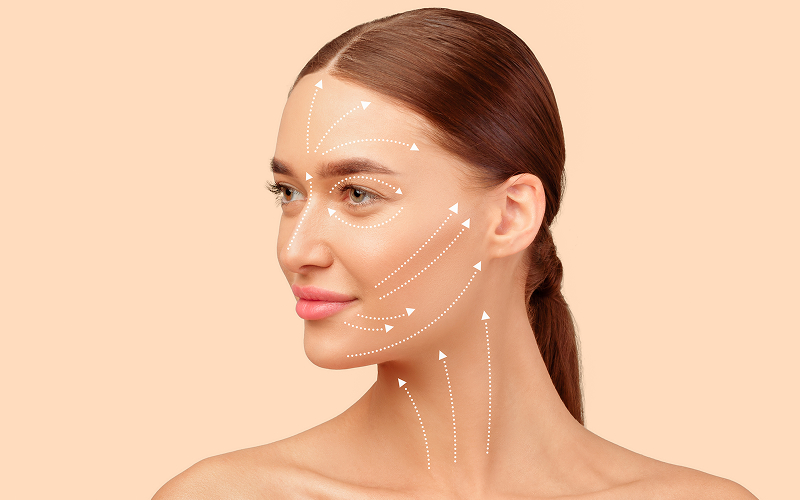
A non-surgical face lift is designed to improve facial contours and manage skin laxity without surgical intervention. Treatments such as injectables, high-intensity focused ultrasound, radiofrequency devices, and other energy-based systems work by delivering controlled stimulation to specific tissue layers. This process encourages gradual tightening and remodelling rather than immediate repositioning.
While these technologies address structural layers beneath the skin, the condition of the skin itself plays an equally important role. Skin density, elasticity, and repair capacity influence how well lifted contours are maintained as tissues adapt. For this reason, non-surgical lifting is often planned alongside regenerative care that supports the dermal environment over time.
Collagen Stimulation: Building the Skin’s Framework
Collagen provides firmness and tensile strength within the dermis. In a non-surgical face lift, energy-based treatments such as High-Intensity Focused Ultrasound (HIFU) or radiofrequency skin tightening deliver energy to deeper layers, initiating a biological response associated with collagen renewal. This gradual process contributes to improved contour definition as the skin remodels.
Regenerative injectables may be used to complement these technologies by supporting the skin’s natural repair processes. Formulations containing polynucleotides such as PDRN (polydeoxyribonucleotide) are used to influence fibroblast activity and extracellular matrix organisation within the dermis. By supporting the skin’s regenerative environment, collagen remodelling triggered by energy-based devices may integrate more cohesively into the skin structure, providing a more stable foundation for lifted contours over time.
Elastin Support: Maintaining Flexibility
Elastin fibres play a role in allowing the skin to stretch and recoil during facial movement. As elastin integrity declines with age, the skin becomes less able to maintain shape under tension. Energy-based lifting technologies stimulate the dermal layer, which may help support elastin function and overall tissue adaptability. Over time, this stimulation can contribute to improved elastic response, allowing lifted areas to better accommodate movement without placing additional strain on surrounding skin.
Polynucleotide treatments are incorporated to support the skin’s regenerative environment. By influencing hydration balance and cellular repair processes within the dermis, the skin may be better able to adapt to changes in tension following lifting procedures. This is particularly relevant in areas where dermal quality has been affected by ageing, sun exposure, or environmental stressors.
Skin Density and Dermal Structure: The Hidden Foundation
Skin thickness and density affect how long contour changes are maintained after a non-surgical face lift. When the dermis is thinner or structurally compromised, lifted areas may be less able to resist gravitational forces, leading to earlier signs of laxity even when deeper tissues have been addressed.
Regenerative treatments focus on the dermal environment rather than surface appearance alone. By supporting fibroblast signalling and the organisation of collagen and elastin within the dermis, gradual improvements in skin density and structural integrity may occur. This provides a more stable foundation for lifting technologies to act upon, allowing contour adjustments to be supported by healthier underlying skin over time.
Targeted Energy Delivery: Reshaping Contours
Non-surgical lifting options such as HIFU treatment and radiofrequency-based skin tightening rely on controlled energy delivery to specific tissue depths to stimulate tightening within fascia and connective structures. A consultation is essential to determine appropriate energy levels and treatment depth, ensuring stimulation is aligned with individual facial anatomy and tissue condition.
When the skin’s regenerative capacity is supported, the surrounding dermal tissues are better able to respond to this mechanical stimulation. This helps contour changes integrate evenly during the recovery phase, allowing the skin to adapt gradually as tissue remodelling takes place.
Surface and Contour Adjustment: Combining Lifting with Regeneration
Mechanical lifting and skin regeneration address different aspects of facial ageing, but their roles are closely related. Lifting technologies focus on tightening structural layers and refining contours, while regenerative care supports dermal recovery, resilience, and long-term skin stability.
At AEON Medical, treatment planning considers this relationship carefully. Non-surgical lifting may be combined with regenerative skin treatments to ensure that contour adjustments are supported by skin that is better able to adapt and recover, rather than relying on mechanical tightening alone.
If you are exploring a non-surgical face lift, a consultation at our aesthetic clinic in Singapore allows for a detailed assessment of both tissue structure and skin condition. This enables treatment planning that considers not only contour adjustment, but also how the skin can support and adapt to these changes over time.
Book a consultation to discuss a structured approach that balances non-surgical lifting with long-term skin support.